WHat the Fuck?
In 1803, Napoleon sold land he hadn’t properly mapped, Britain and America drew borders through Indigenous territories, and 223 years later Alberta is arguing about separating from a country whose treaties existed before the province did.
WHole Rabbit Hole, Three Sentences
Napoleon sold Louisiana to the United States for $15 million in 1803, even though nobody knew exactly where its northern boundary ended, and some early maps included parts of what are now Alberta and Saskatchewan. Britain and America eventually drew the 49th parallel, Canada acquired western territories through the Hudson’s Bay Company, Louis Riel fought for Métis rights, and European settlers arrived to build communities on land already occupied by Indigenous nations. Alberta and Saskatchewan became provinces in 1905, long after treaties had been signed with First Nations, leaving today’s Alberta separatists facing one rather inconvenient historical fact: the province came after the promises, not before them.
How a French emperor, an American president, a British king and a department store helped shape Canada’s borders — and why Indigenous nations are still dealing with the consequences.
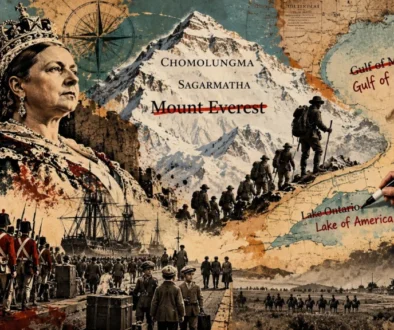
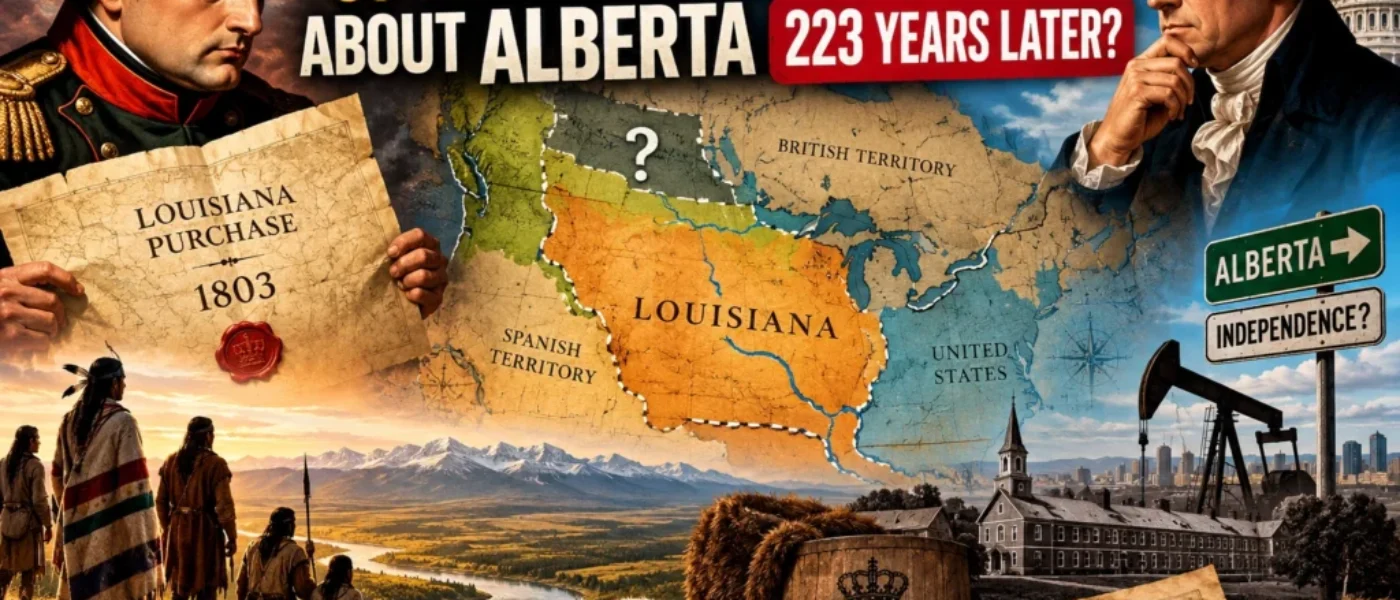
In 1803, Napoleon Bonaparte sold Louisiana to the United States for $15 million, despite nobody knowing exactly where its northern boundaries ended. Some early maps and interpretations of French territorial claims even extended into parts of what are now Alberta and Saskatchewan.
It was one of the largest land transactions in history, involving an enormous territory already inhabited by Indigenous nations who had neither offered their land for sale nor been consulted about the arrangement.
Britain and the United States eventually established the 49th parallel as their boundary from the Lake of the Woods to the Rocky Mountains in 1818, dividing territories that Indigenous peoples had occupied for thousands of years. Canada subsequently acquired vast western territorial claims through an arrangement with the Hudson’s Bay Company, negotiated treaties with First Nations, displaced Métis communities, and encouraged European immigrants to settle the Prairies.
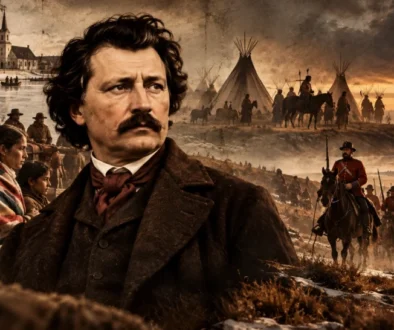
Louis Riel fought to protect Métis rights and helped negotiate the creation of Manitoba in 1870. Fifteen years later, Canada executed him for treason.
Meanwhile, thousands of Ukrainian and Polish families arrived from Galicia, a region of the Austro-Hungarian Empire, including my own ancestors. They established farms, built communities and helped shape the Prairie provinces we recognize today, often without fully understanding the history of the land they were encouraged to settle.
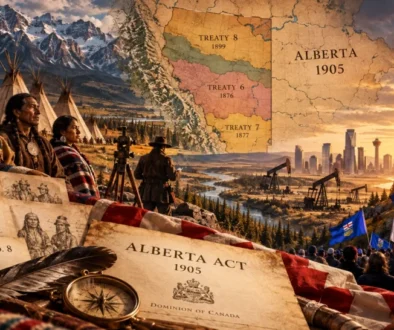
Alberta and Saskatchewan did not become provinces until 1905, decades after Treaties 6 and 7 had been signed and several years after Treaty 8. Those treaty relationships, along with other Indigenous and Métis rights, did not disappear when Parliament drew provincial boundaries.
And now, 223 years after Napoleon’s extraordinary transaction, Alberta separatism has brought the question of territorial authority back into public debate.
Because a province voting to leave Canada is not the same thing as having the constitutional authority to take every community, treaty relationship and square kilometre within its borders along with it.
The point? European governments spent centuries buying, selling and dividing land that was never empty. They drew the borders, made the promises, broke plenty of them, and left future generations to deal with the consequences.
And 223 years later, we’re still arguing over who gets to decide what happens to the land.
The History Behind the Borders
This history is far too extraordinary to squeeze into one article. Behind every border are centuries of imperial ambitions, commercial interests, political negotiations, broken promises and ordinary families trying to build lives amid decisions made by people they had never met.
These four stories follow the astonishing chain of events that helped shape western Canada.
1. Napoleon Sold Louisiana. Nobody Knew Where It Ended.
In 1803, Thomas Jefferson wanted to secure New Orleans and access to the Mississippi River. Napoleon offered him an enormous portion of North America instead, for $15 million.
There was just one problem. The boundaries were so poorly defined that France, Spain, Britain and the United States could not agree on precisely what had been sold.
Fifteen years later, the Convention of 1818 helped establish a boundary that still separates much of Canada from the United States.
Read: Napoleon Sold Louisiana. Nobody Knew Where It Ended.
2. The King Who Gave Half a Continent to a Department Store
In 1670, King Charles II granted the Hudson’s Bay Company sweeping trading and governing powers over an enormous portion of North America.
Two hundred years later, Canada arranged to acquire those territorial claims, compensating the company £300,000 while allowing it to retain valuable land interests.
Yes, the same Hudson’s Bay Company where Canadians would eventually buy blankets, winter coats and kitchen appliances.
Read: The King Who Gave Half a Continent to a Department Store
3. Canada Bought the Land. Somebody Forgot to Tell the People Living There.
When Canada arranged to acquire Rupert’s Land, the people already living there had not agreed to the transfer.
Louis Riel and the Métis resisted, negotiated protections and helped bring Manitoba into Confederation. The federal government subsequently failed to implement important land promises with the diligence required of the Crown.
Riel would eventually be executed, while Canada’s expansion continued across territories governed by treaties whose promises were repeatedly contested and inadequately honoured.
Read: Canada Bought the Land. Somebody Forgot to Tell the People Living There.
4. Alberta Wants to Leave Canada. There’s Just One Rather Important Problem.
Alberta became a province in 1905. Treaties 6, 7 and 8 were signed before Alberta existed.
Those treaties established enduring relationships and obligations that cannot simply be erased by a provincial referendum.
With Alberta separatism once again part of the political conversation, the question is no longer simply whether Albertans want to remain Canadian.
It is whether a province can determine its political future without addressing the rights of the Indigenous nations whose territories existed long before its boundaries were drawn.
Read: Alberta Wants to Leave Canada. There’s Just One Rather Important Problem.
The Fuckwhittery Footnote
The events in these stories are real. The treaties, territorial transactions, political decisions, legal disputes and consequences are documented in historical records. There is considerably more to discover.
Most of us learned about the Louisiana Purchase, the Hudson’s Bay Company, Louis Riel and the creation of the Prairie provinces as separate chapters in Canadian and American history. Rarely were we shown how those events connected, or how decisions made centuries ago continue to influence the political arguments of today.
And perhaps that is the most astonishing part of all this fuckwhittery. We inherited the maps, the borders and the political institutions, but we were not always taught the history of how they came to exist, whose rights were involved, or what promises were made along the way.
History becomes considerably harder to forget when we stop treating borders as permanent facts of geography and start examining the extraordinary human decisions that created them.
Psst… The Story Doesn’t End With Napoleon
The Louisiana Purchase was only one chapter in a much larger story about European governments claiming, buying and dividing North American land. In 1670, King Charles II granted the Hudson’s Bay Company enormous trading and governing powers across territory already occupied by Indigenous nations.
Nearly two centuries later, Canada arranged to acquire the company’s territorial interests. The Hudson’s Bay Company received £300,000 and retained valuable land rights. The Indigenous nations and Métis communities living there were not equal partners in that transaction.
The next story follows the royal charter, the fur trade and the company that eventually became a Canadian department store.
Keep Following the WHole Rabbit Hole
The next chapter moves from Napoleon’s disputed borders to the Hudson’s Bay Company’s royal charter and the transfer of Rupert’s Land to Canada.
The FuckWHittery Footnote
The events in these stories are real. The treaties, territorial transactions, political decisions, legal disputes and consequences are documented in historical records. There is considerably more to discover.
Most of us learned about the Louisiana Purchase, the Hudson’s Bay Company, Louis Riel and the creation of the Prairie provinces as separate chapters in Canadian and American history. Rarely were we shown how those events connected, or how decisions made centuries ago continue to influence the political arguments of today.
Perhaps that is the most astonishing part of all this fuckwhittery. We inherited the maps, the borders and the political institutions, but we were not always taught how they came to exist, whose rights were involved or what promises were made along the way.
History becomes considerably harder to forget when we stop treating borders as permanent facts of geography and start examining the extraordinary human decisions that created them.
Still Wondering WHat the Fuck?
How does Napoleon selling Louisiana in 1803 connect to Alberta separatism more than two centuries later? Follow the disputed borders, the Hudson’s Bay Company, Louis Riel, Indigenous treaties and the creation of the Prairie provinces. Discover why the promises made before Alberta existed still matter when people talk about leaving Canada.
Take This Rabbit Hole to ChatGPT →The WHole Paper Trail
From Napoleon’s land deal to modern arguments about Alberta separatism, the historical record tells a much bigger story. These documents and resources explain the transactions, treaties, resistance movements and constitutional decisions that shaped Western Canada.
U.S. National Archives — Louisiana Purchase Treaty (1803) →
The original agreement between France and the United States, documenting Napoleon’s sale of Louisiana.
Library of Congress — A Question of Boundaries →
Explains the uncertain boundaries of the Louisiana Purchase and the disputes that followed.
U.S. Office of the Historian — Convention of 1818 →
The agreement that established the 49th parallel as part of the boundary between British North America and the United States.
The Canadian Encyclopedia — Rupert’s Land →
The Hudson’s Bay Company’s enormous territorial claim and its eventual transfer to Canada.
The Canadian Encyclopedia — Louis Riel →
Riel’s leadership in the Red River and North-West resistances, the creation of Manitoba and his execution in 1885.
Government of Canada — Treaties and Agreements →
Government information on historical treaties, treaty relationships and the rights and obligations that continue today.
Government of Canada — Alberta Act (1905) →
The federal legislation establishing Alberta as a province, including provisions addressing existing rights and interests.
The Canadian Encyclopedia — Ukrainian Canadians →
The immigration of Ukrainian families, including settlers from Galicia, and their contributions to Prairie communities.
Supreme Court of Canada — Reference re Secession of Quebec (1998) →
The Supreme Court’s ruling on provincial secession, constitutional negotiations and why a referendum alone cannot legally separate a province from Canada.