WHat the Fuck?
Canada flooded Indigenous homelands, allowed industrial pollution to poison traditional food sources, separated children from their families and transferred promised land to settlers, then spent generations arguing over whether it owed anyone an explanation.
WHole Rabbit Hole, Three Sentences
In the 1950s, hydroelectric development flooded the homeland of the Wabaseemoong Independent Nations in Ontario, while mercury pollution, residential schools and child welfare policies caused further harm to families and traditional ways of life.
The Mohawks of the Bay of Quinte were promised land by the British Crown after the American Revolution, only to lose much of it through government land transfers, including an unlawful transfer in 1837 that led to a land dispute lasting nearly two centuries.
These are not simply stories about injustices committed long ago, but about Canadian communities still living with the consequences of decisions made within our parents’ and grandparents’ lifetimes, reminding us that understanding history is not about accepting inherited blame, but recognizing the responsibilities we have today.
What two First Nations’ histories reveal about the Canada we inherited.
It Wasn’t 200 Years Ago. It Was Happening in Our Lifetime.
Two First Nations in Ontario, two very different histories, and a reminder that the consequences of Canada’s treatment of Indigenous peoples did not end generations ago.
There is a common frustration expressed by Canadians whenever the subject of Indigenous land claims, treaty rights, clean drinking water or government compensation comes up. Why are we still being held responsible for something that happened 200 years ago? We weren’t there. We didn’t take anyone’s land, send children to residential schools or make the decisions that created these problems.
And that’s true. Most Canadians living today had nothing to do with the original decisions. But what we often fail to recognize is that these weren’t isolated events confined to some distant colonial past. The displacement of Indigenous communities, the destruction of traditional livelihoods, environmental contamination and the removal of children from their families continued well into the twentieth century. Some of these events happened while we were growing up, raising families, buying homes and building the lives we now take for granted. Their consequences remain unresolved.
Two First Nations in Ontario have documented their experiences in their own words, and their histories offer a perspective that deserves far more attention than it receives.
Wabaseemoong Independent Nations: A Homeland Flooded
In northwestern Ontario, near Kenora, the Wabaseemoong Independent Nations have documented a history that deserves far more attention than it has received.
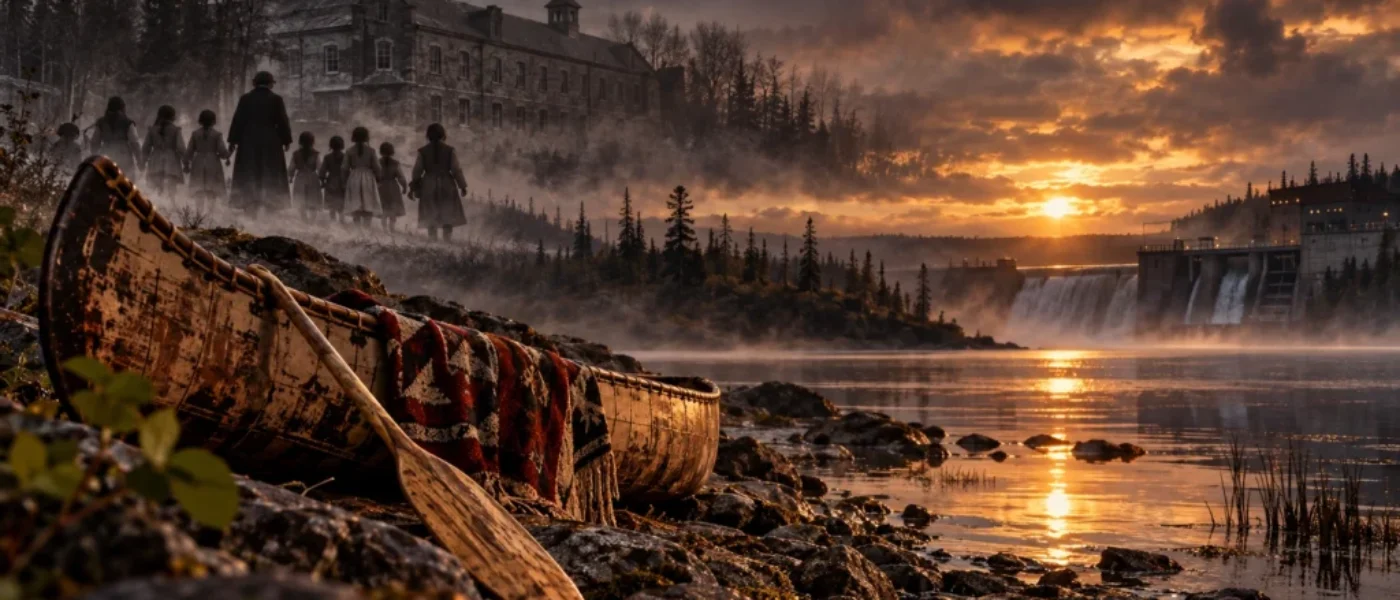
During the 1950s, hydroelectric development flooded parts of their homeland, affecting homes, burial grounds and traditional harvesting areas. Industrial mercury pollution followed in the 1960s and 1970s, while residential schools and child welfare policies disrupted families and communities.
These events took place within living memory, and their consequences did not disappear when the dams were completed or the institutions closed.
Wabaseemoong’s own historical account describes what happened, how community members responded and their long struggle for recognition and accountability. It includes details that rarely appear in the Canadian history most of us learned in school.
Rather than retell their experiences here, I encourage you to read their history in their own words.
Rather than attempt to retell their entire history, I encourage readers to hear it directly from the people who experienced it.
Mohawks of the Bay of Quinte: Land Promised, Land Taken
Near Deseronto, Ontario, the Mohawks of the Bay of Quinte have documented a history of British promises, disputed land transfers and a struggle to recover land that began nearly two centuries ago.
Following the American Revolution, Mohawk families who had supported the British relocated to the Bay of Quinte, where the Crown formally recognized their land grant in 1793.
Over the following decades, much of that land was transferred away. One dispute, involving more than 923 acres known as the Culbertson Tract, dates back to an unlawful land transfer in 1837. Negotiations and legal proceedings continued into the twenty-first century, with a partial settlement reached in 2022.
The Mohawks of the Bay of Quinte have documented this history, the promises made and their continuing efforts to resolve the land dispute. Their account is the one worth reading.
Rather than attempt to retell their entire history, I encourage readers to hear it directly from the people who experienced it.
The Canada We Inherited
These two histories are different, but they share something important. Both involve decisions made by Canadian governments that affected Indigenous lands, families and communities. Both have consequences that continue today.
Most Canadians know something about residential schools, land disputes and environmental damage. Far fewer have heard these histories directly from the First Nations who experienced them.
The Wabaseemoong Independent Nations and the Mohawks of the Bay of Quinte have made their histories available through their own websites. Their accounts deserve more attention than another interpretation of what happened or why it matters.
Understanding Is Not the Same as Accepting Blame
Learning about Canada’s history does not mean accepting personal blame for decisions made before we were born. It means being willing to discover what happened, including the parts we were never taught.
I am not Indigenous. I cannot speak for these Nations, nor do I intend to. They have their own voices, their own histories and their own ways of telling them.
My purpose here is simply to help more Canadians find those accounts.
We cannot change what happened in 1837 or 1957. We can, however, stop assuming that the history we learned in school was the whole story.
We inherited a country shaped by decisions we did not make. The least we can do is listen to the people who have been telling us about those decisions for generations.
Perhaps the most useful thing we can do is stop talking long enough to listen.