In Grade 8 history, many of us learned about the War of 1812. We learned about battles, borders, and the time British troops burned the White House.
What I do not remember learning is what happened just after the war.
Summer failed to show up.
In April 1815, Mount Tambora erupted on an island in what is now Indonesia. It was one of the largest eruptions in recorded history. The blast sent gases and tiny particles high into the sky. They spread around the world and helped block some of the sun’s warmth.
By 1816, people across parts of North America and Europe were living through what became known as the Year Without a Summer.
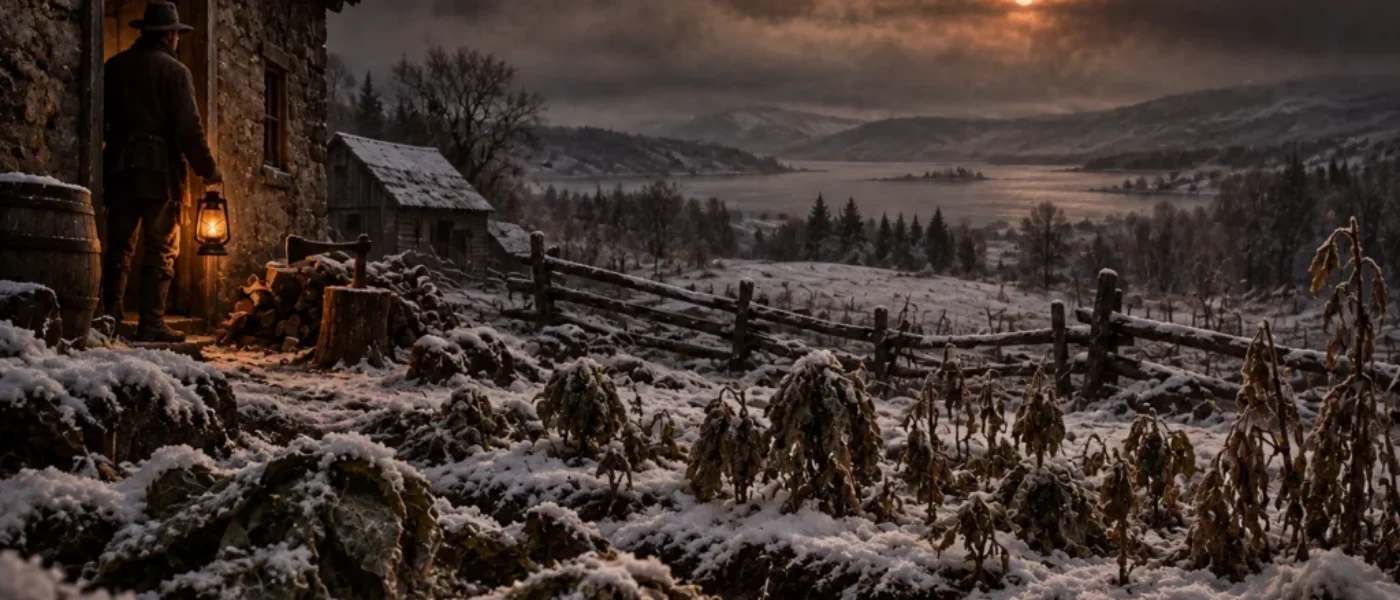
Imagine being a farmer in British North America. The war is over. You have survived years of fear and disruption. You are ready to repair your home, plant your crops, and get back to ordinary life.
Then June arrives, and it snows.
You plant again. Frost comes back. You look at the sky, look at your fields, and try to work out what you are supposed to feed your family.
There is no weather forecast. No internet. No message from Indonesia saying, “Sorry about the volcano.”
News of the eruption could travel by ship, but knowing that a volcano had erupted was very different from knowing it could change the weather on the other side of the world. People wrote down what they saw, and newspapers reported the strange cold. They could not pull up a map and watch the cause spread across the planet.
What would you think?
Was the sun failing? Was this a punishment? Was next year going to be worse? If the crop died in the field, would there be enough food to reach spring?
People looked for answers wherever they could. Some feared that God was angry. I can easily imagine a preacher offering an explanation from the pulpit. I cannot say every church did that. The fear, though, was real—and so was the need for an answer.
The food problem was real, too. In parts of what is now Canada, cold and late frosts damaged crops. Poor families were already struggling. Newspapers described people living on milk and boiled wild plants when they could not get bread.
And that is the part that stops me.
We teach children that a war ended. We send everyone home at the end of the chapter. But the families living there did not get an ending. They had to go outside, plant something, and hope summer would arrive in time.
Some places fared better than others. Some of the worst crop losses came later, and the hardship carried into 1817. This was never one neat day when the whole country froze. It was a long stretch of strange weather, damaged harvests, and people trying to make sense of what they could see.
Two centuries later, we can put the pieces together: a volcano in Indonesia, particles in the sky, colder weather far away, and families worrying about their next meal.
They could see only their piece.
How in the world did we learn which building burned in Washington, but miss the year that summer seemed to disappear?
The Fuckwhittery Footnote
The events in this story are real. The names, dates, and decisions are there for anyone who wants to follow the rabbit hole. There is plenty more to discover.
Most of us did not learn this part of history in a Canadian classroom. We think we should have. Because history is easier to remember when you see the astonishing things people actually had to face—and the endless human capacity for fuckwhittery.