About Us
About Us It Started With One Ridiculous Word.
Some of the best ideas don’t begin in a boardroom.
They begin around a dinner table with good friends, a bottle of wine, and people laughing so hard they can barely breathe.
That’s exactly how Fuckwhittery was born.

One Dinner. One Word. One Domain. One Spectacular Spelling Mistake.
More than sixteen years ago, my husband and I were having dinner at the home of one of our closest friends and her husband in Toronto.
Sharon is one of those wonderfully rare people who treats the English language like an artist. Brilliant with grammar, sharp as a tack, and forever inventing words that somehow make perfect sense.
To this day, “Faschnarfus” still makes us cry with laughter.
At some point during dinner, she wandered back into the room after missing part of the conversation, looked at us and asked, completely matter-of-factly…
“What fuckwittery is this?”
I laughed so hard I could barely breathe.
Before dessert was over, I had my phone out, logged into my domain registrar, and bought Fuckwhittery.com.
I had absolutely no idea what it would become.
I just knew one day it had to exist.
Fast-forward sixteen years.
I’m building a website dedicated to the colossal arrogance, spectacular stupidity and astonishing decisions that have shaped human history.
And then, in October 2026, I discover something rather extraordinary.
I’d spelled the fucking word wrong.
Not an obscure alternative British spelling. Not some clever linguistic variation. Just an entirely unnecessary H that had been sitting there, minding its own business, for sixteen years.
The actual word is fuckwittery.
My domain is Fuckwhittery.
And somehow, a website devoted to documenting humanity’s most spectacular fuckups began with one of my very own.
You genuinely cannot make this shit up.
So the H stays.
Because if there’s one thing history has taught me, it’s that sometimes the mistakes make the best stories.

Sometimes Good Ideas Need Time
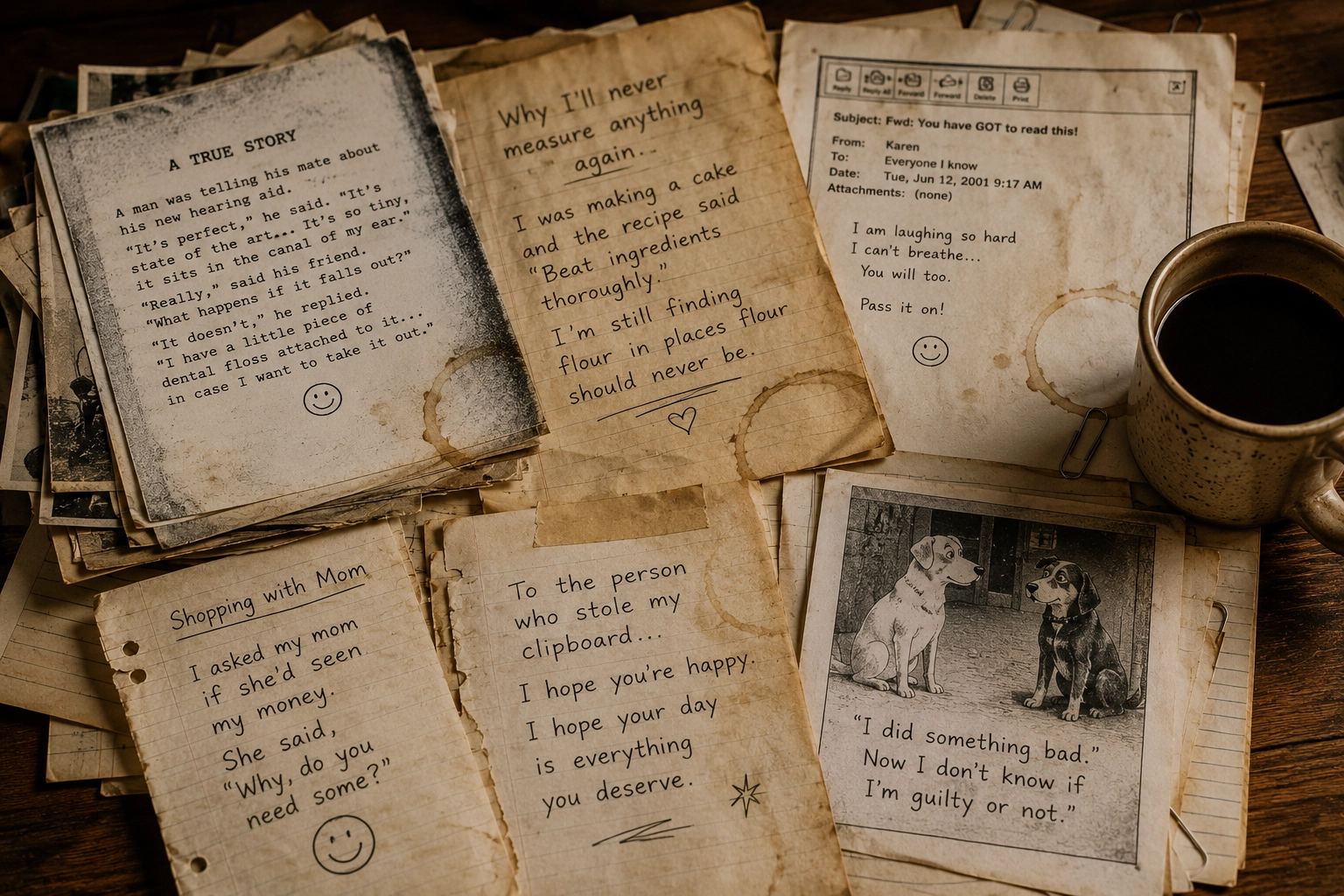
Originally, I imagined Fuckwhittery as a slightly twisted, definitely-not-PG version of Chicken Soup for the Soul — a collection of hilarious stories about the wonderfully ridiculous things that happen to ordinary people.
Then life happened. Work happened. There were moves, family, responsibilities and all the usual distractions that turn “I should build that” into “maybe next year.”
And apparently, sixteen years of owning a domain with an extra H without once thinking to check the spelling.
Like so many good ideas, Fuckwhittery quietly sat on the shelf.
Looking back, I’m glad it did.
Because somewhere along the way, the idea finally collided with something I have loved for most of my life:
History.
And as it turns out, history has more than enough fuckwittery to go around.
With or without the H.
I Am a History Freak
I love history. I always have.
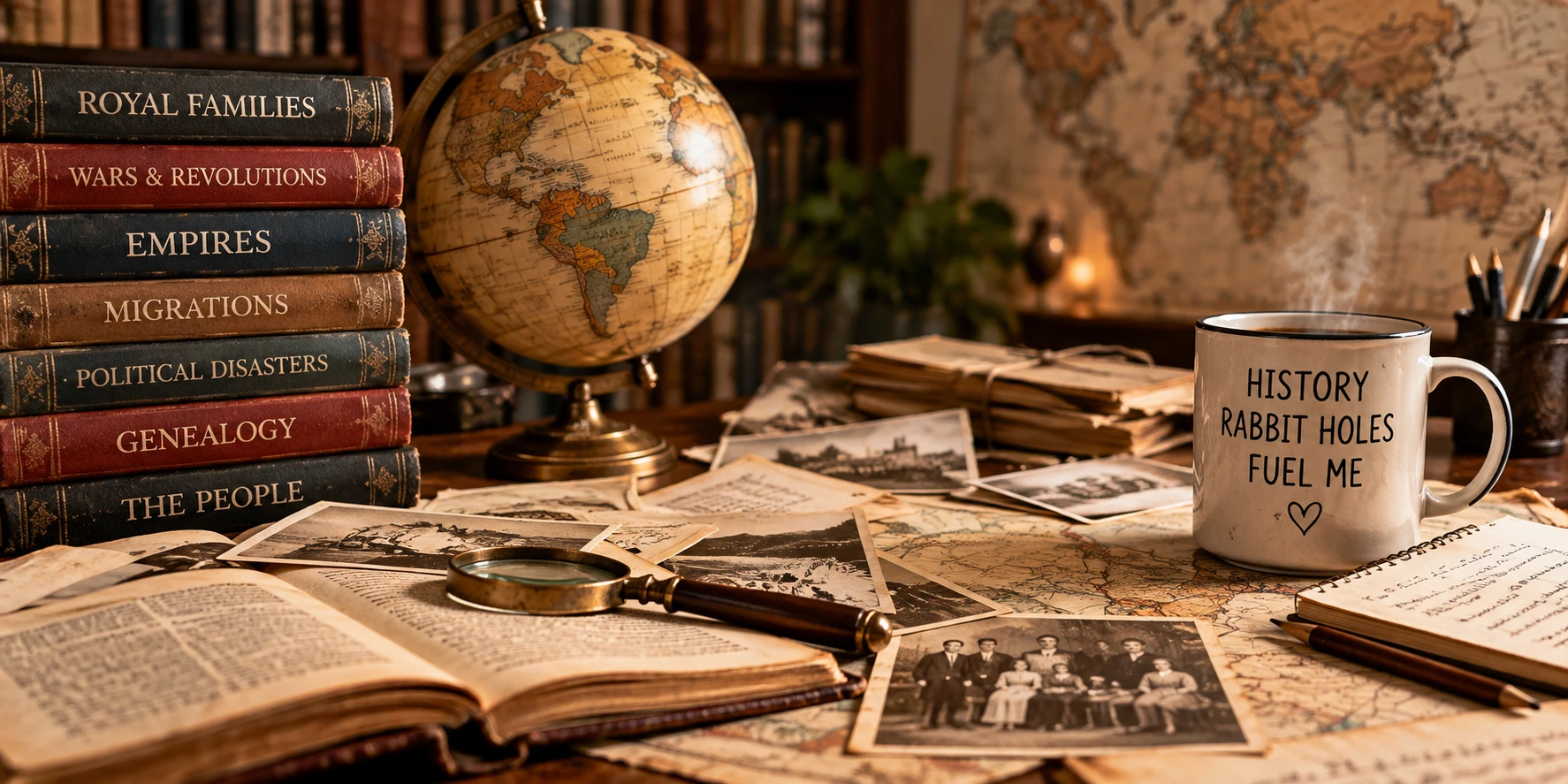
I’ve spent decades reading books about world history — wars and migrations, royal families and revolutions, collapsing empires, political disasters and the extraordinary chains of events that explain why the world looks the way it does today.
I’m a sponge for it.
Give me an obscure historical rabbit hole and I can disappear for hours, only to emerge wondering how something this astonishing was never mentioned in school.
And the older I get, the more I realize that history isn’t a neat collection of dates, famous people and important battles. It’s an enormous, tangled mess of human decisions. Some brilliant. Some disastrous. And some so spectacularly stupid that you wonder how anyone involved managed to get dressed in the morning.
Then genealogy made it worse.
I have an Ancestry account with branches of my family tree reaching back into the 1600s. And once you start looking beyond the names and dates, genealogy becomes something much bigger.
Where did these people live? What did they do? Why did they leave? What was happening around them? What industry employed an entire family for generations and then suddenly disappeared? What war had just begun? What government decision changed the place where they lived?
And perhaps the most fascinating question of all: What did these enormous historical events actually mean to the ordinary people who had to live through them?
A census entry stops being a line on a document.
It becomes a doorway into history.
And sometimes you open that door and discover that your own family was standing in the middle of a story you’ve been reading about for years.
That’s when history stops being something that happened to other people, somewhere else, a long time ago.
It becomes personal.
The History Between the Lines
The more history I read, the more often I find myself stopping and thinking:
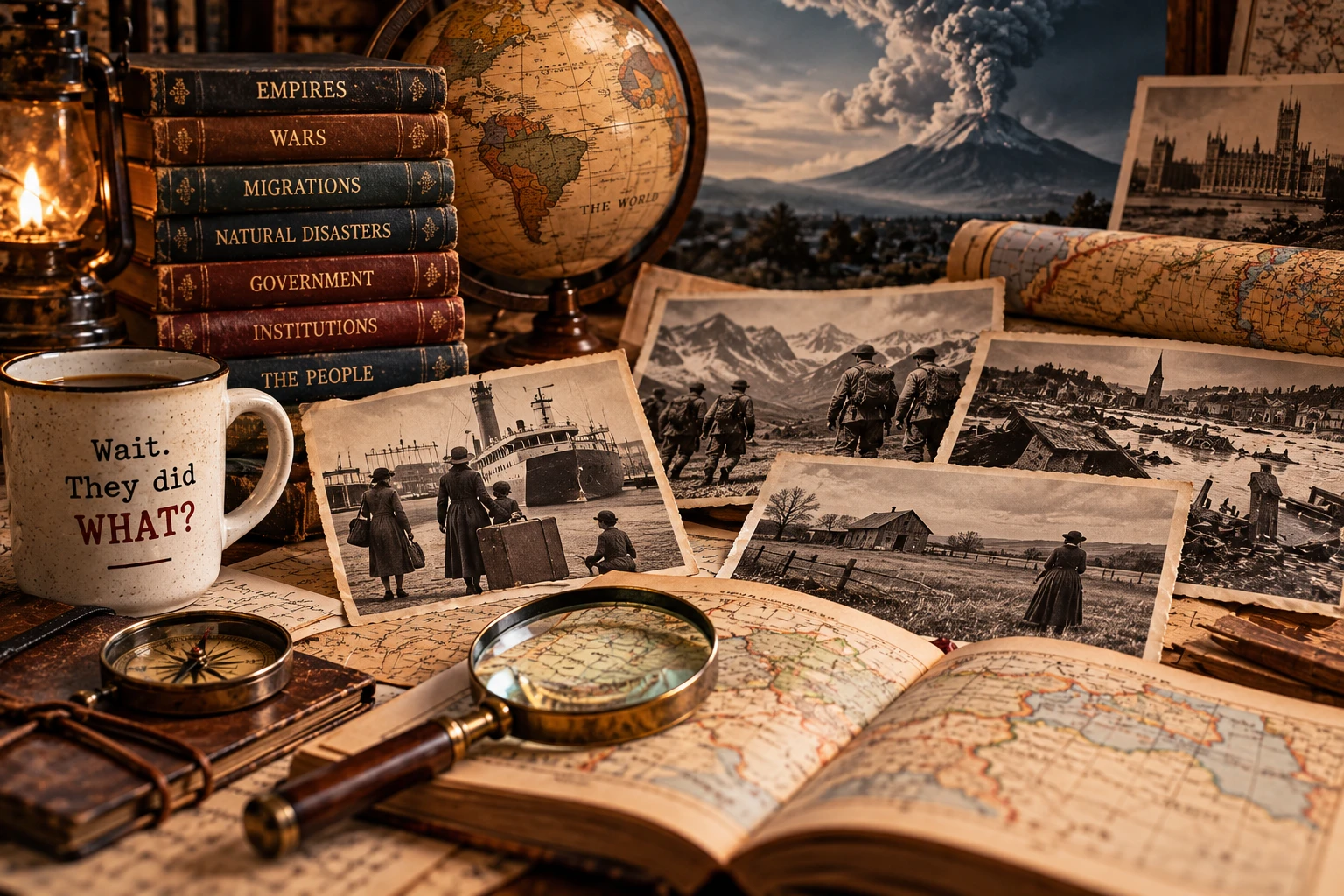
Wait. They did WHAT?
And I’m not talking about obscure historical trivia. I’m talking about enormous events that changed countries, destroyed communities, redrew borders and shaped the world we’re living in today.
Governments making spectacularly bad decisions. Empires marching into countries they barely understood, convinced they knew better than the people who actually lived there. Institutions confidently creating systems that harmed the very people they claimed to be helping. Entire communities moved, flooded, imprisoned or simply erased from the map in the name of progress.
And behind every one of those decisions were ordinary people who had to live with the consequences.
That’s the part that fascinates me.
An empire could look at a mountain range and imagine it had conquered an entire country, while the people living in those mountains had other ideas entirely. Engineers could look at a river and draw a new shoreline straight through somebody’s home. Governments could sell enormous territories to one another without consulting the people already living there.
And somewhere in 1816, a family could watch frost destroy their crops in the middle of summer, never knowing that a volcano had erupted on the other side of the planet.
The facts are astonishing enough. But the human stories behind them are extraordinary.
Imagine packing up the home where you expected to grow old because someone in an office had decided your entire village needed to disappear beneath a reservoir. Imagine planting your crops for the third time, desperately hoping the frost wouldn’t return. Or putting your child aboard a ship bound for another continent because someone had convinced you it was for their own good.
Imagine being a soldier standing at the foot of the mountains of Afghanistan, looking up at the landscape ahead and wondering which idiot had promised this would be easy.
These weren’t simply historical events. They were people’s lives.
And the further I dig, the more I realize how often the version of history we were taught concentrated on the people making the decisions, rather than the people forced to live with them.
Kings. Queens. Generals. Prime ministers. Explorers. The occasional spectacularly incompetent administrator.
We learned their names, memorized their dates and moved on to the next chapter.
But what about everybody else?
History becomes much harder to forget when you put the people back into the story.
And sometimes, when you do, the sheer scale of the fuckwittery becomes impossible to ignore.
Why Fuckwhittery?
Because the more history I uncover, the more often the only reasonable response seems to be:
What in the actual fuck were they thinking?
That became the Fuckwhittery I wanted to build.
Not a place for rewriting history, but for going back and actually reading it.
Following the sources. Digging past the comfortable summary. Asking what really happened, who made the decisions, who benefited, who paid the price — and why the hell nobody ever told us about it.
Some of these stories are hilarious. Some are absurd. Some are infuriating. Others are heartbreaking. Quite a few begin as something ridiculous and become much less funny once you discover who had to live with the consequences.
There is humour in our very human tendency to believe we understand far more than we actually do.
But there is a difference between laughing at a spectacularly bad decision and laughing at the people who suffered because of it.
Here, the people matter.
So do the names, the dates, the records and the evidence.
And there will always be room to shake our heads at the sheer fuckwhittery of it all.